
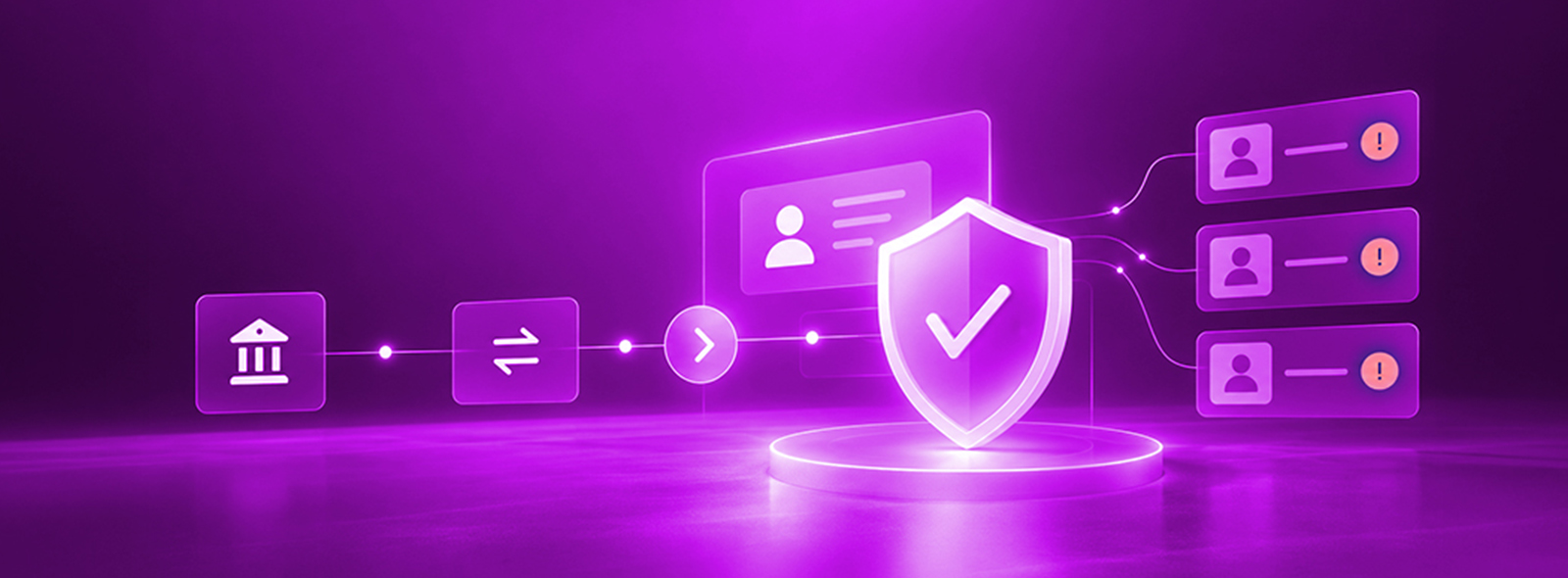
Financial institutions need to process transactions at near-instantaneous speeds. And at that speed, they also have to navigate an unprecedentedly volatile regulatory and sanction environment.
The cost for watchlist compliance is rising. Enforcement bodies like the U.S. Treasury's Office of Foreign Assets Control (OFAC) impose severe civil penalties, sometimes exceeding $1.5 billion in a single year.
Traditional architectures are hitting an operational ceiling. Real-time watchlist screening has emerged as the essential foundation for transforming compliance from a reactive bottleneck into a proactive capability.
The Paradigm Shift: Why Batch Screening Is No Longer Sufficient
Historically, financial institutions relied on scheduled batch processing. Running customer databases against sanctions and risk lists during off-peak overnight hours. While batch screening remains useful for retrospective data reconciliation and periodic database refreshes, relying on it as a primary defense leaves critical vulnerability windows open.
With the rapid expansion of instant payment rails funds settle in seconds. Sanctions lists, Politically Exposed Person (PEP) registries, and high-risk databases change dynamically. A batch check performed overnight cannot prevent an illicit payment or high-risk entity onboarding that occurs at midday.
This exposure emphasizes that institutions must use risk-based real-time screening controls that analyze senders, receivers, and intermediaries before funds are released.
Overcoming the False-Positive Dilemma: Precision
The primary operational barrier to scaling real-time watchlist screening has traditionally been the sheer volume of false positives.
- The Burden of Noise: Legacy screening tools relying on rigid exact-string rules frequently generate very high false-positive rates. For most banks, 99% of alerts are false positives because of poor data quality.
- Operational Strain: Manual alert adjudication on this scale diverts compliance analysts from high-value investigations, creates payment holds, and damages the customer experience.
Modern real-time screening platforms resolve this friction by pairing high-throughput matching logic with AI/ML-powered post-decision tuning. By applying multi-attribute "crisscross" matching (evaluating names, aliases, dates of birth, national IDs, passports, addresses) and relationships across non-Latin scripts (such as Arabic and English transliterations) advanced watchlist and name screening engines achieve 99.5% matching accuracy with a fraction of the false-positive noise.
Real-Time Watchlist Screening Across the Customer Lifecycle
Proactive risk management requires embedding real-time screening continuously across the entire customer journey rather than treating it as an isolated onboarding check. Leading institutions structure their screening architecture across three synchronized operational tiers:
- Forward Scan (Real-Time Onboarding): Instant, API-driven screening during digital onboarding initiation, and performing sub-second pass/fail checks against global watchlists before account opening.
- Reverse Scan (End-of-Day Synchronization): Automated daily screening of the institution's entire customer base against incremental updates published by global regulatory bodies.
- Rescan & Perpetual KYC (reKYC): Continuous background re-screening triggered automatically whenever a customer profile changes or a list update occurs.
By shifting from static periodic reviews to continuous KYC, financial institutions close the dangerous intelligence gaps between review cycles.
Coverage Beyond Core Lists: Comprehensive Intelligence
To satisfy regulatory expectations, modern real-time watchlist screening must extend far beyond basic national sanctions lists. An enterprise-grade risk management framework screens customer across:
- Global Sanctions Registries: OFAC (SDN and Non-SDN), United Nations Security Council (UNSC 1267), European Union, and Interpol Red & Yellow Notices.
- Politically Exposed Persons (PEPs): Multi-tier global PEP databases covering prominent public officials, their immediate family members, and close relatives/associates (RCAs).
- Complex Ownership & Control Structures: Automated adherence to regulatory rules, identifying non-sanctioned entities that are owned 50% or more by designated bad actors.
- Adverse Media & Special Categories: Real-time news monitoring for negative media, Special Interest Persons (SIP), Special Interest Entities (SDP), State-Owned Entities (SOE), and internal custom blocklists.
Using Watchlist Compliance as a Growth Engine
Deploying an agile, AI-driven real-time watchlist screening solution transforms compliance from a defensive cost center into a strategic business enabler:
- Accelerated Onboarding: Replacing manual verification with real-time AI resolution slashes customer onboarding timelines by 20x (reducing weeks-long processes to seconds).
- Drastic Cost Optimization: Enterprise deployments demonstrate up to a 75% reduction in infrastructure costs and a 50% reduction in manual verification overhead.
In a financial ecosystem defined by instant settlements, global interconnectivity, and stringent regulatory oversight, static compliance is no longer viable. Real-time watchlist screening protects you from severe statutory penalties, and streamline operations.


