
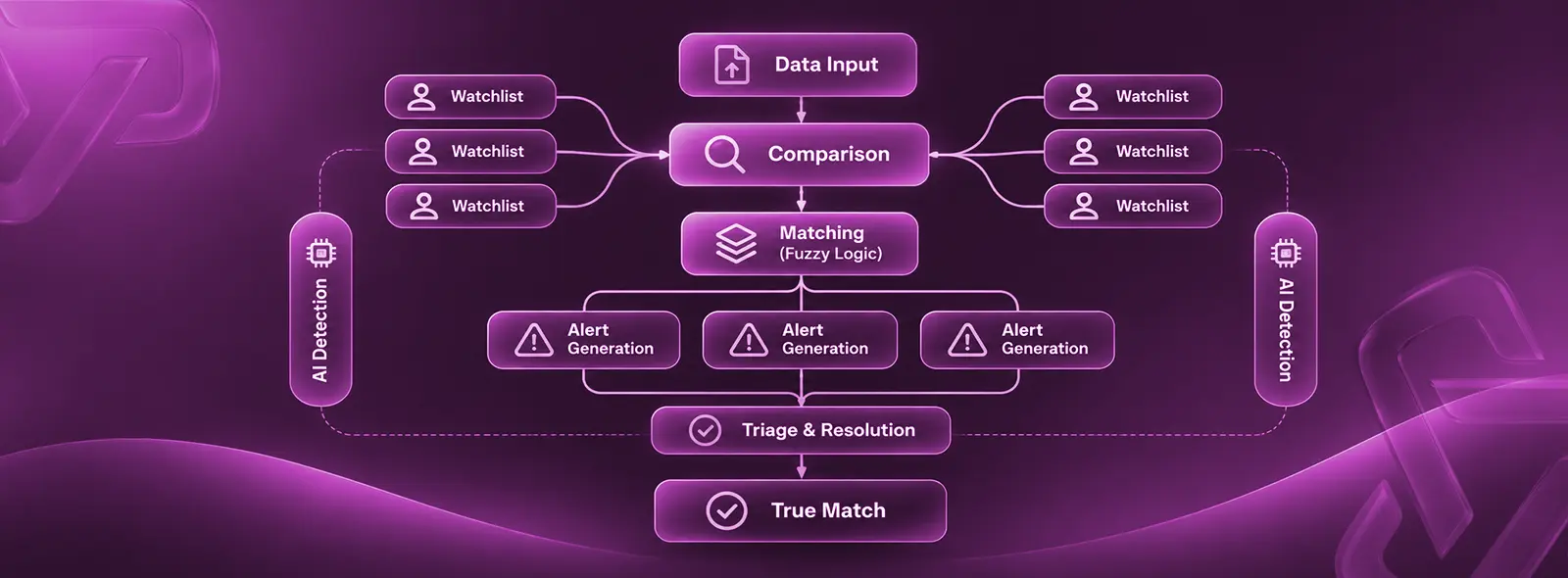
The concept of watchlist screening is straightforward. Verify individuals and entities against high-risk registries. Executing it at enterprise scale is a complex challenge. Compliance teams must evaluate billions of customer data points against global, regional, and local watchlists containing 10 to 20 million active records. So even a good watchlist compliance software can still fail operationally. Further if list updates are delayed, customer data is incomplete, or alerts remain disconnected from compliance workflows, compliance is even harder.
Financial institutions must ensure that screening happens at the right time, uses reliable data, produces actionable alerts and connects with the decisions that follow.
Doing so manually or through rigid, legacy rules engines creates severe operational bottlenecks, flood compliance queues with false positives, and delays customer onboarding. Technology strengthens watchlist compliance across these areas: automation, intelligent matching and system integration. Together, they help institutions scale screening and make it real-time.
- Intelligent Matching
One of the biggest operational challenges in watchlist compliance is distinguishing a genuine match from a similar name. Names may differ because of spelling variations, abbreviations, aliases, transliteration between languages or inconsistent data entry.
Traditional sanctions screening tools rely on exact-string matching or primitive fuzzy algorithms that trigger alerts for minor typos or superficial name similarities. This creates two critical failure points: over-blocking legitimate customers (driving up false positives) and under-blocking sophisticated bad actors who manipulate name permutations, aliases, or non-Latin scripts.
E.g., “Mohammed Al Rashid” might resemble a watchlist entry recorded as “Mohammad Al-Rashed.” A name-only comparison may generate an alert, but additional identifiers can help an analyst determine whether the records refer to the same individual.
Modern compliance engines solve this through automation and intelligence. They combine fuzzy matching, phonetic techniques and comparisons across available attributes, such as date of birth, nationality, address and identification details. Configurable thresholds allow institutions to align screening behavior with their risk appetite and review procedures.
Advanced engines move beyond name-only checks by performing crisscross multi-attribute matching across names, "Also Known As" (AKA) aliases, dates of birth, passport numbers, Emirates/National IDs, addresses, and corporate directorships in real time. By pairing phonetic algorithms with machine learning and contextual review, platforms evaluate background context, such as location, corporate affiliations, and biographies.
- Automation
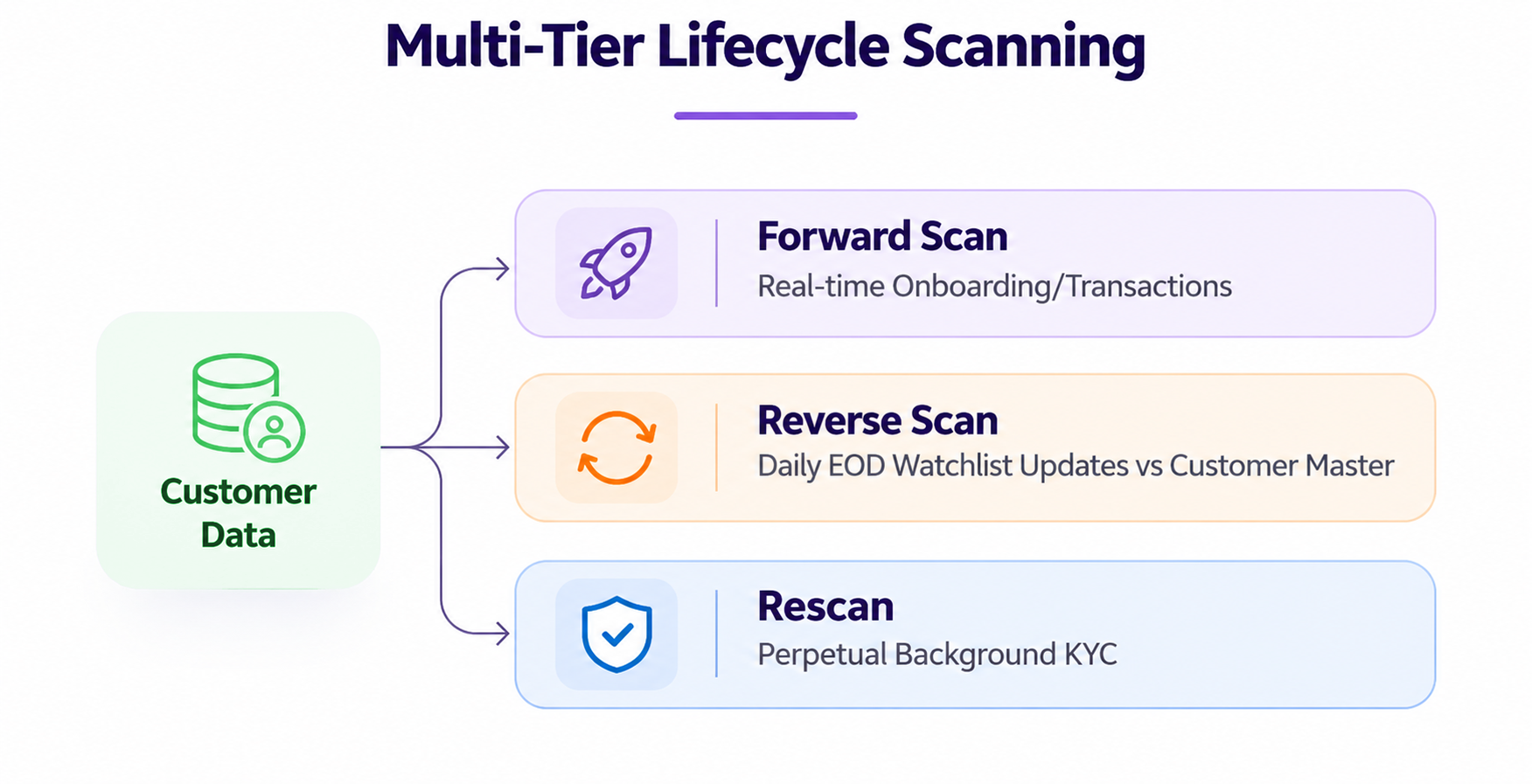
Manual screening becomes difficult to sustain as customer volumes grow and risk information changes. Automation helps move screening from an isolated check to a repeatable operational process. Moreover, customer portfolios expand with time. Compliance software automates the process by covering every stage of the customer lifecycle through three synchronized modes:
- Forward screening: Checks prospective customers during onboarding
- Reverse screening: Rechecks existing customer records when watchlists are updated.
- Ongoing screening: Performs continuous, background monitoring triggered automatically whenever risk profiles or regulatory lists change.
Automation also helps orchestrate list ingestion, screening schedules, alert generation, case assignment and reporting. Instead of depending on manual uploads and spreadsheet-based processes, compliance teams can establish consistent workflows with defined controls and exception handling.
- System Integration
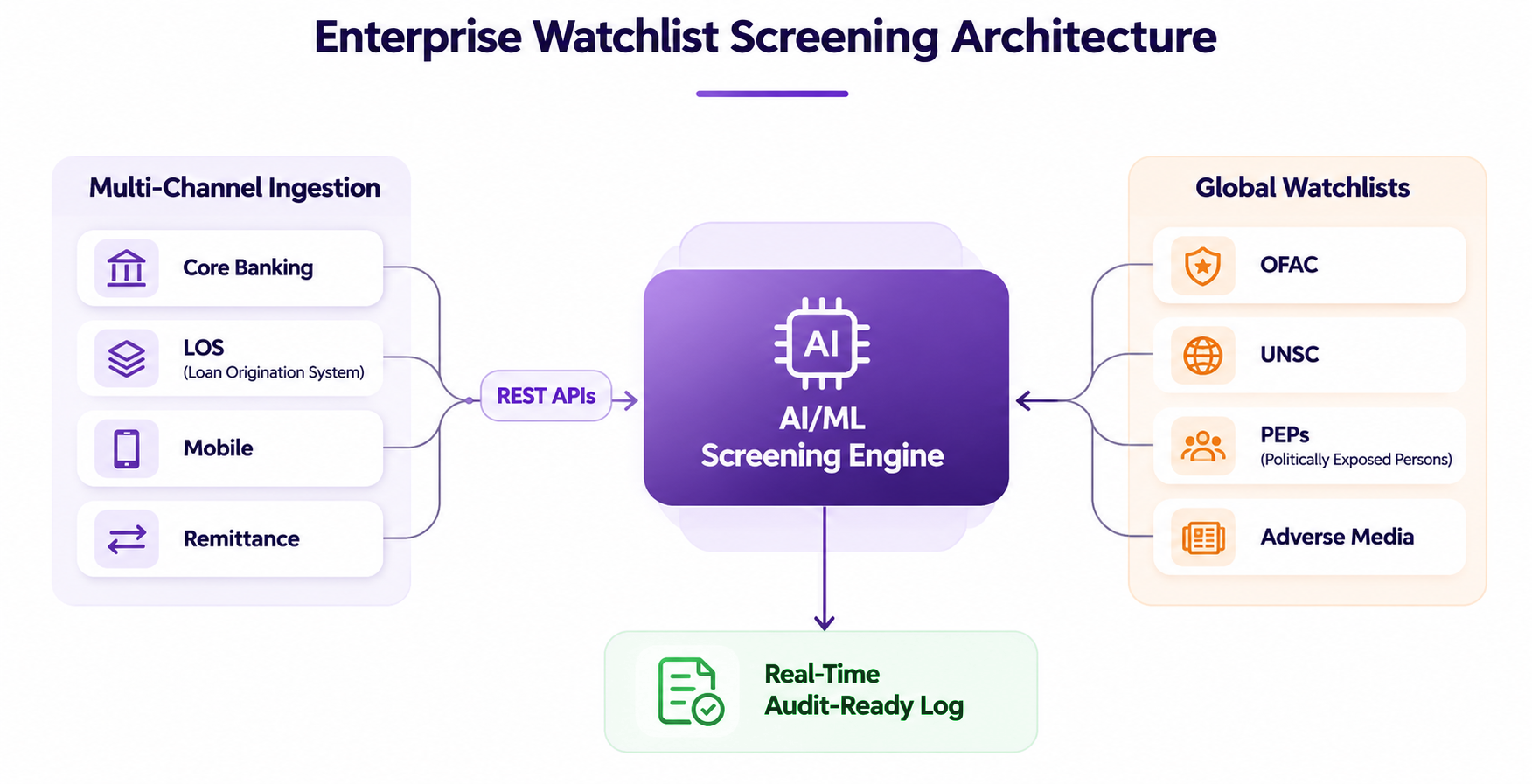
Even the most advanced compliance software fails if isolated from core business operations. Screening is simply more effective when it is embedded in the workflows. As integration with core banking, CRM, or digital onboarding allows screening to happen at the appropriate decision points.
Modern screening and compliance software leverage open REST APIs, or connectors to plug directly into existing IT infrastructure without requiring expensive system overhauls.
Integration also reduces repeated data entry. By integrating directly with an enterprise Customer Master Data Management platform, the screening layer queries a unified Golden Record. This ensures that when an update occurs in credit card or lending databases, screening checks automatically reflect the latest customer profile.
Further, integrated screening software generates time-stamped audit trails. Besides complete compliance transparency for regulatory inspections, it makes screening decisions traceable.
The Takeaway
Effective watchlist compliance depends on more than access to lists. It requires current data, reliable matching, automated workflows, integration with operational systems and a traceable review process.
For leaders evaluating their compliance software, the key question is not simply whether a system can screen a customer. It is whether it can deliver the right screening at the right time and support a defensible decision afterwards.
Explore Posidex Screen to learn how automated watchlist screening can support your compliance workflows.


